'I Love Boosters' stole my heart
What can crooked rooms and shoplifting tell us about capitalism and fashion?

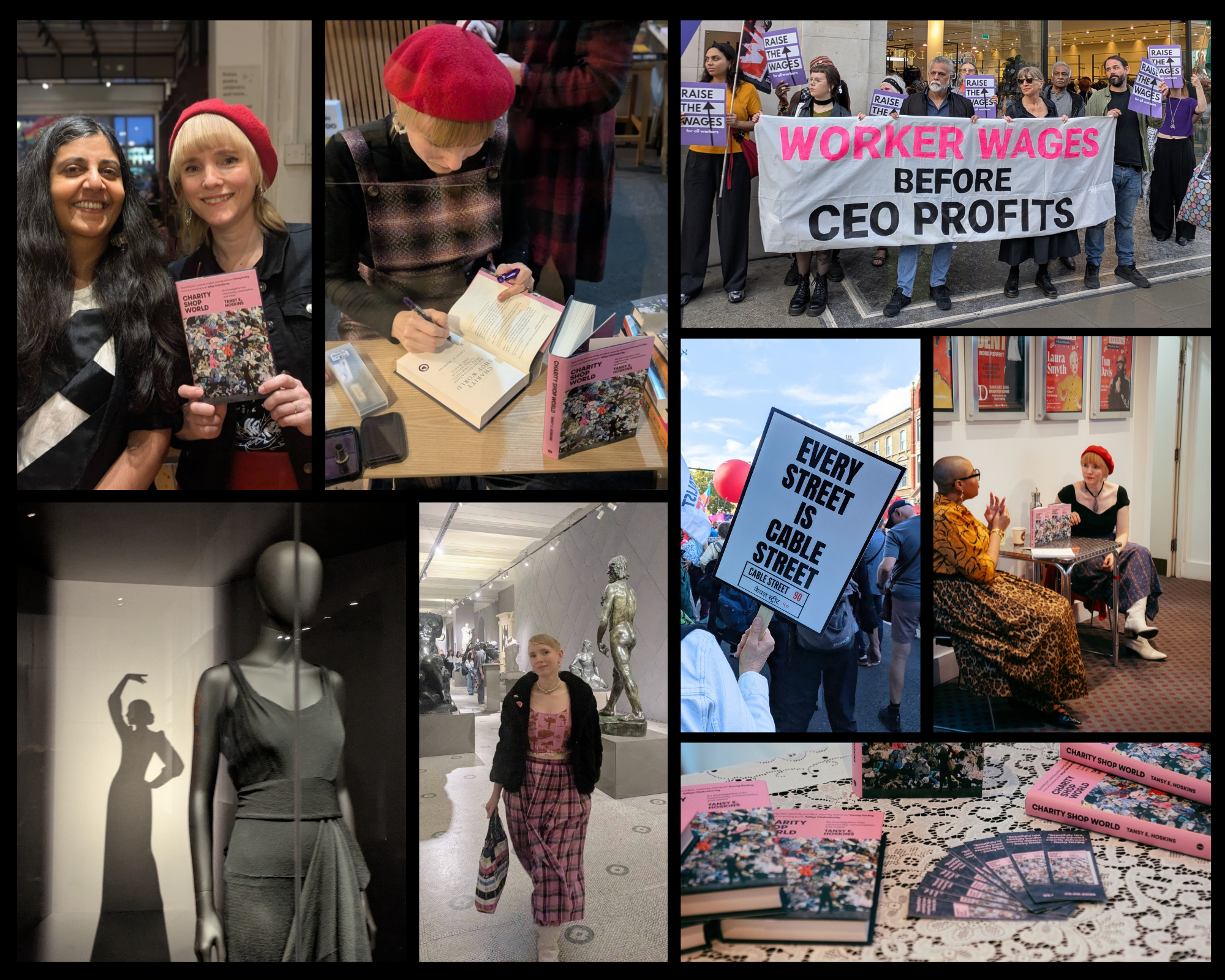
Hello, how are you?
A very warm welcome to everyone who has signed up to my newsletter in the past month, it is great that you are here. A reminder that my new book Charity Shop World is available in all good bookshops as well as online.
Things to note:
- I'm doing the Fashion Roundtable Book Club - 21st October, 1.30pm Online.
- I'm doing the Stroud Book Festival - 5th November, 6-7pm. Lansdown Hall.
- The Guardian just published this great article based on Charity Shop World.
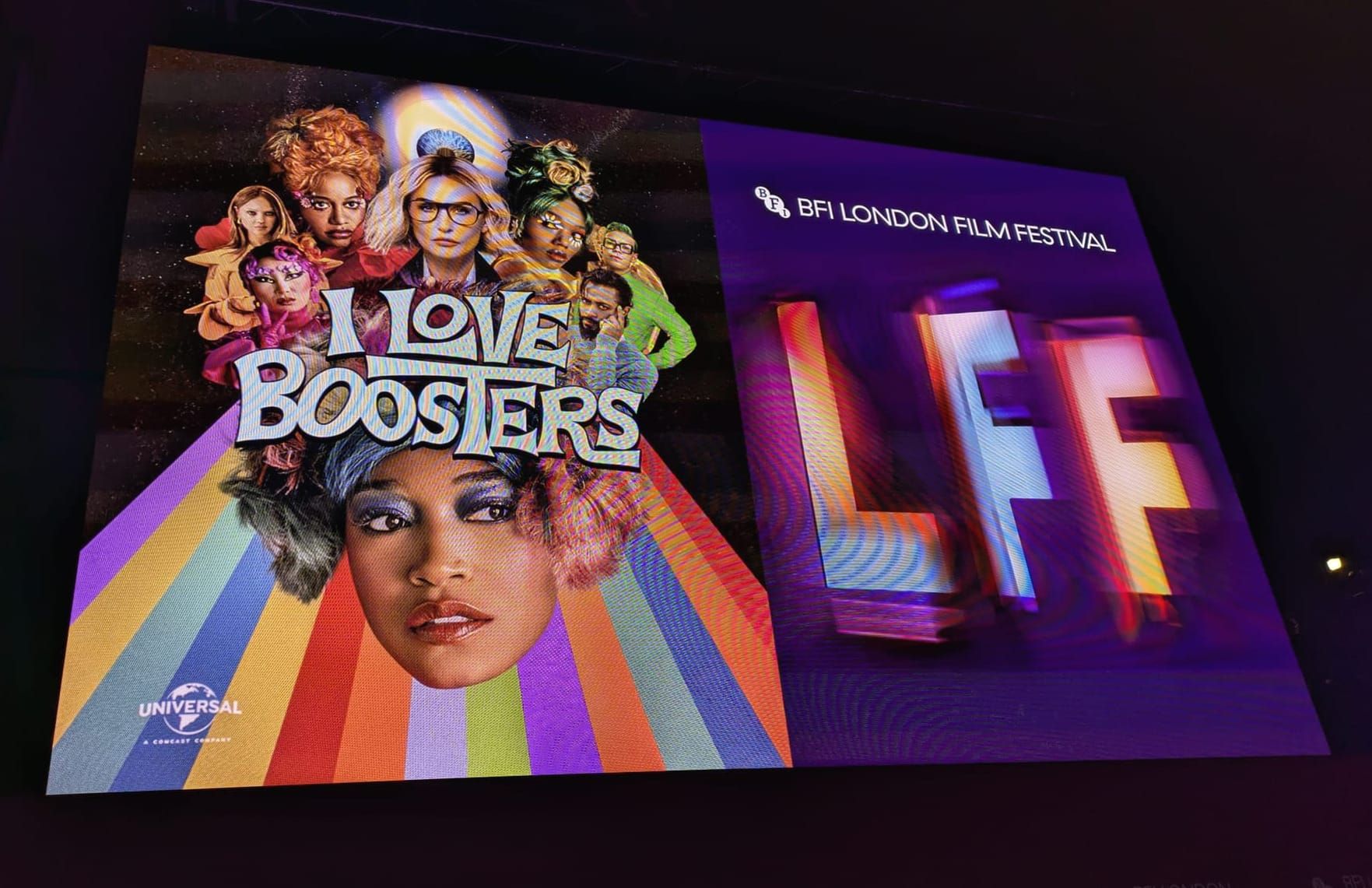
All aboard for ‘I Love Boosters’
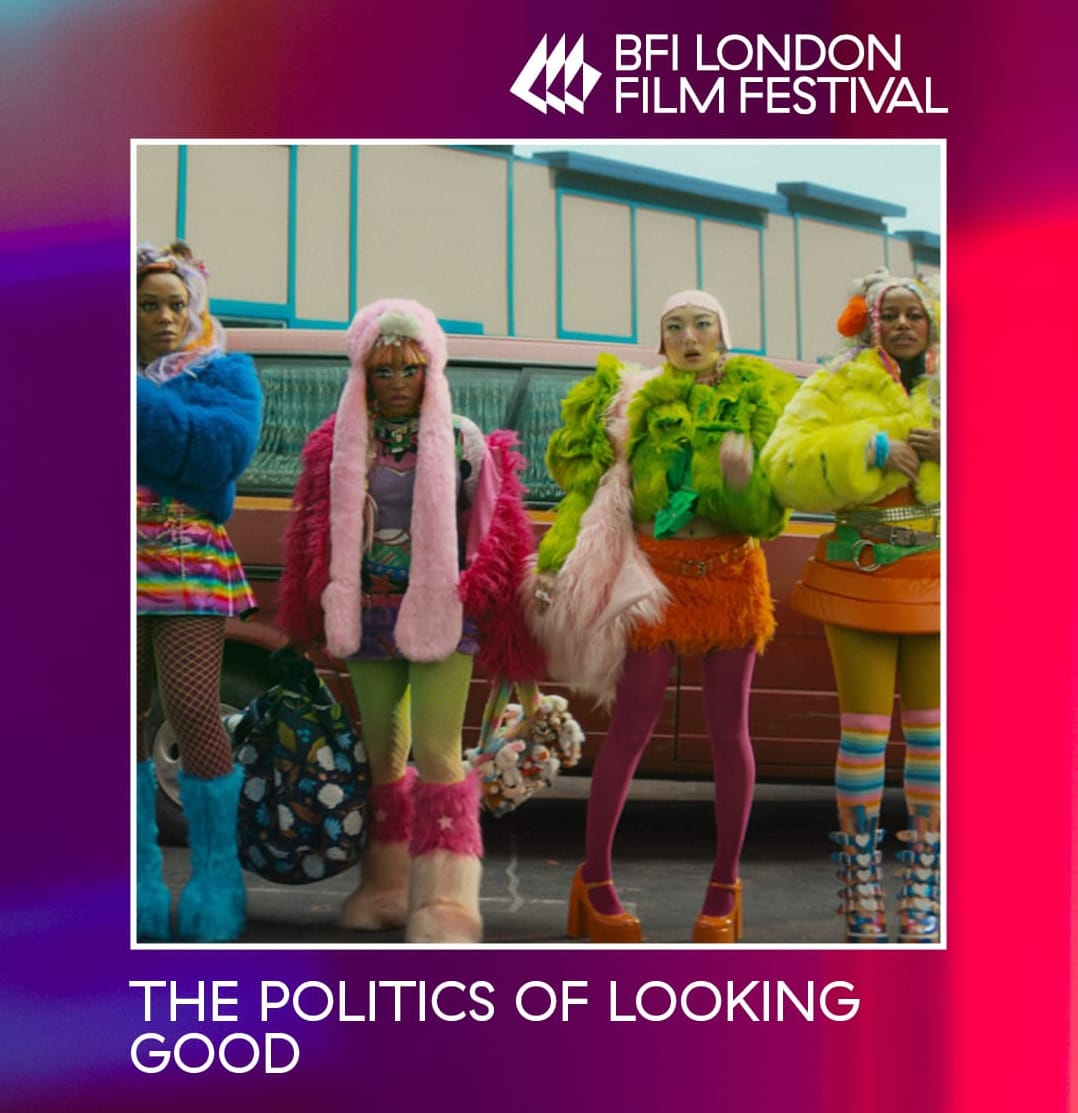
This past week I went to the international premiere of Boots Riley's new film I Love Boosters then did a panel called The Politics Of Looking Good at the BFI London Film Festival. I loved watching this bizarre film with only a vague idea of what it was about, so I'm going to stay carefully spoiler free... Trust me, what follows is a tiny fraction of this gigantic film.
Strap in for I Love Boosters - a surreal, colourful, maximalist rollercoaster ride through shoplifting, squatting, high fashion, catwalks, villainous She-E-Os and $100,000 dollar suits. Amidst the chaos be prepared to be sideswiped by a moving portrait of class consciousness and the tragic inequality that maintains fashion production.
Hostile Architecture
I Love Boosters is about a group of friends who are expert ‘boosters’ – they shoplift expensive clothes then resell them in their community at a discount. One of the gang claims this is ‘Fashion Forward Filanthropy’ but for Corvette, the leader of the gang (played to perfection by Keke Palmer) who lives in an abandoned chicken shop – this is crime to survive.
Even as she robs boutiques, Corvette dreams of being part of fashion and is in awe of famous designer Christie Smith who is the (unhinged) creative mind behind Metro Designers. (I had no idea the world so badly needed Demi Moore as a wildly pompous head of a fashion house, but I now can’t imagine this not existing.)
You’ll have to watch the film to see if it is possible for shoplifting to become part of a global resistance movement, instead I want to pick up on one aspect of the film - the crooked room.
One of the joys of this film is its weird Looney Tunes physicality, Christie Smith lives and works in a tilted skyscraper – the rooms are literally tilted and the floors slope sharply downwards towards sinister glass walls. The only person who seems to be able to walk around with any sense of normality is Christie herself.
There is a pivotal scene in the film where Corvette sneaks into the skyscraper and meets the rich, white woman she idolizes. It is painful to watch Corvette open her heart to a billionaire and talk earnestly about wanting to work in fashion. As the audience, we have witnessed the extent of hostile architecture built to ensure Corvette has no chance of success.
The Crooked Room
In the years following World War II, scientists conducted psychology studies to determine how much of what we see determines how we act in a physical space. People were put into rooms where everything – windows, doors, picture frames – were off-kilter, tilted by sometimes as much as 35 degrees. The people in the study had to figure out what was actually straight and to tilt their chair until they ‘felt straight’. Some people ignored the visual clues and did not move their chairs, while some people tilted themselves over until they felt comfortable in the room.
While not intended to be a political study, the crooked room research struck a chord with Professor Melissa Harris-Perry who identified the crooked room as ‘just like being a Black woman in America’ with ‘this consistent experience of walking around in a room where everything is off-kilter.’ A concept she expands on in her 2011 book ‘Sister Citizen.’
I Love Boosters built a crooked room and uses it to show Corvette being repeatedly knocked down. Fashion is a skyscraper where Corvette cannot even stand up, let alone thrive. This is a film about what it is like not to belong in a world built for Christie Smith – something that becomes even more powerful when the film’s framework becomes global.
As well as whiteness, the crooked room theory as developed by Harris-Perry feels applicable to social structures built by the architects of hetero-normativity, of compulsory able-bodiedness, or of systems of wealth and class - to all of these and more. The rooms demand that people fit to them and not the other way around.
As well as going on a madcap caper, we journey with Corvette as she realises that it has never been a lack of talent that has kept her out and confronts a choice between old dreams (and demons) and new horizons.
I Love Boosters is an unashamedly political film – it blends Marxism with technicolour fashion and asks us to think about how the tough economic realities of our world shape the way people think and view the world and how, in return, these thoughts and views shape our realities.
Having watched a lot of fashion films that are either valuable but tragic documentaries, or effusive biopics that sometimes go as far as to mask fascism with fashion, I found I Love Boosters deeply refreshing, thought provoking and energising. It's not a perfect film, but Boots Riley has made an incredible follow up to his epic 2018 film ‘Sorry To Bother You’ and he continues to be one of the world’s most imaginative interrogators of the capitalist system. Go see!
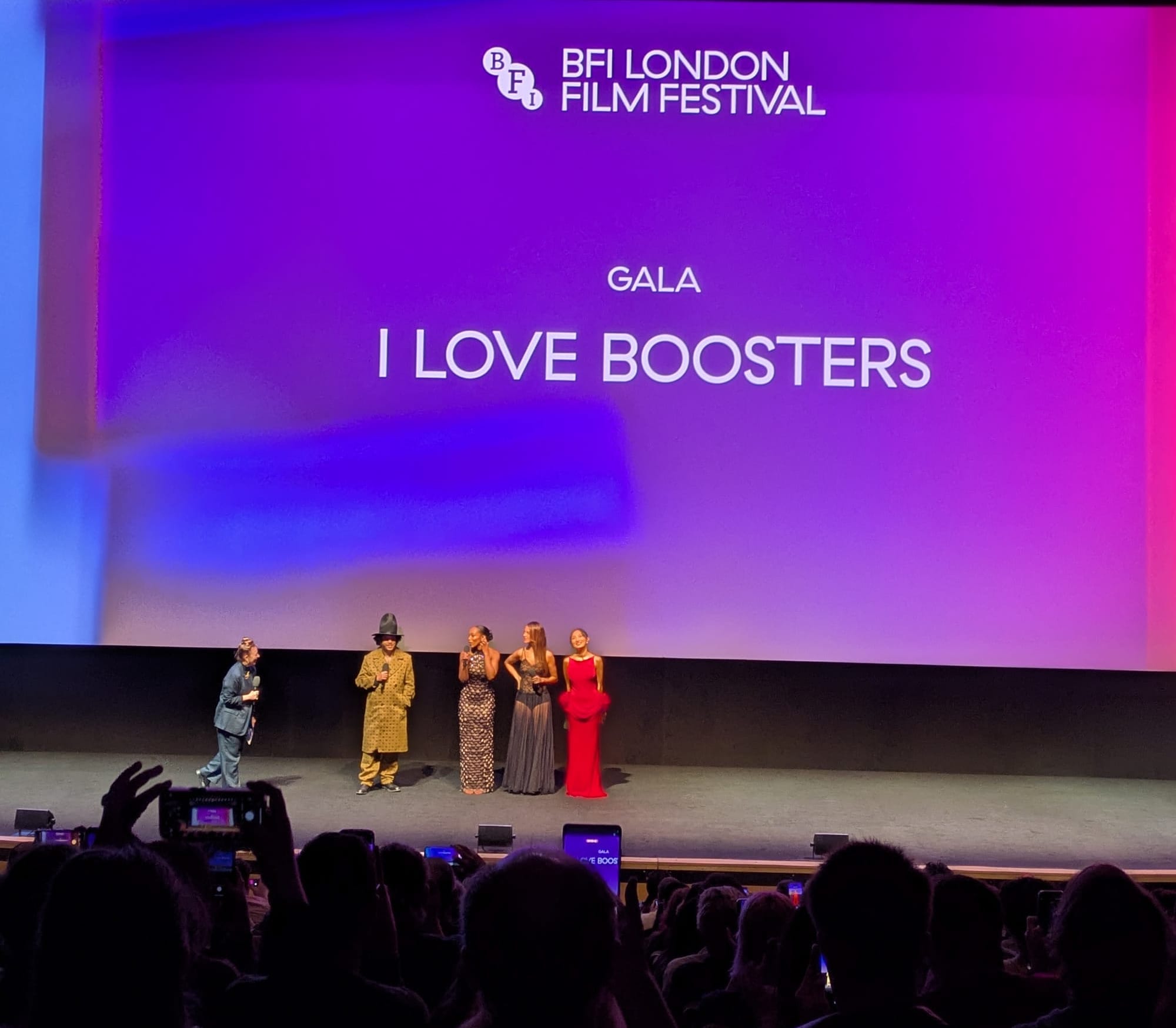
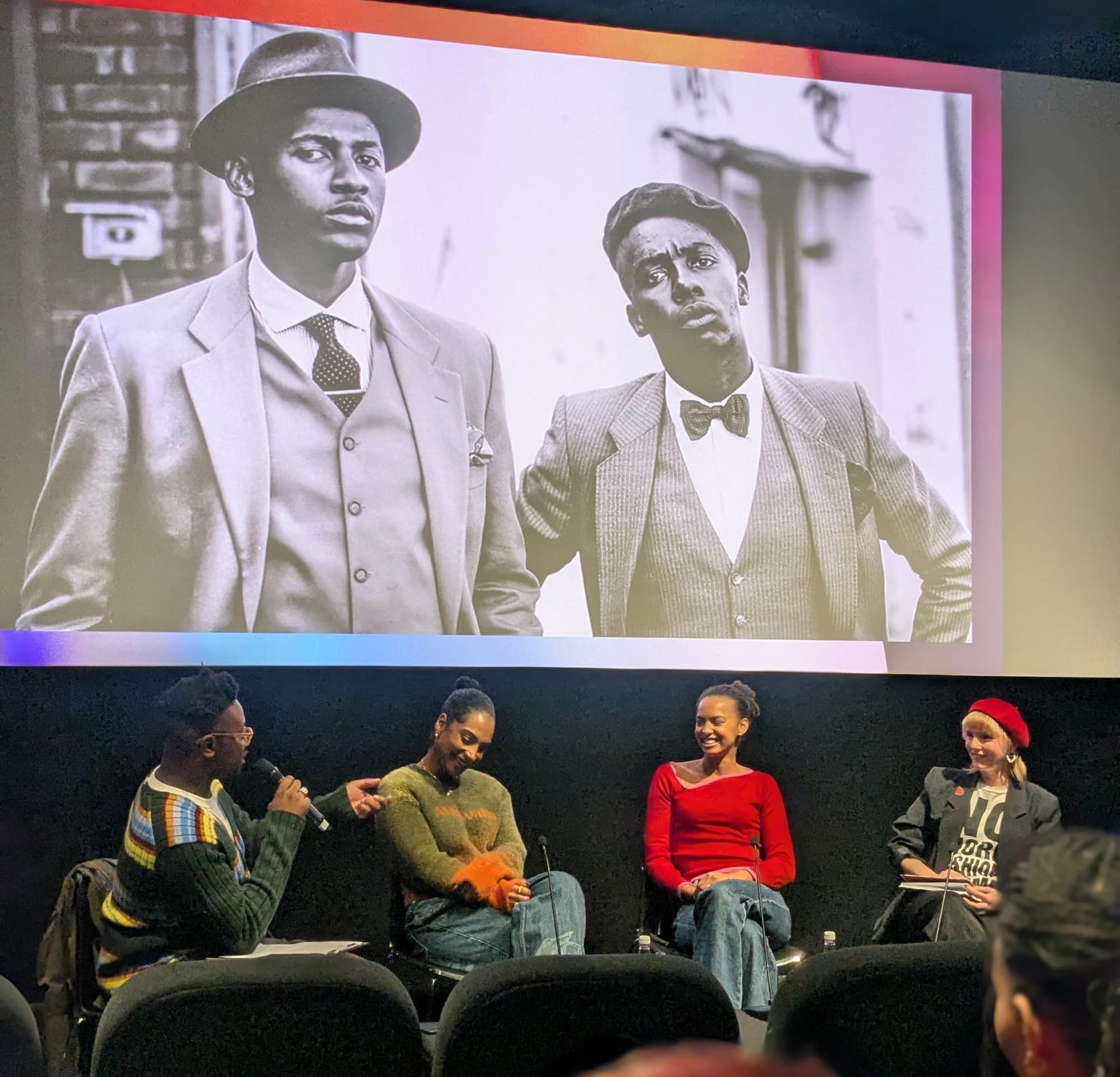
Boots Riley interviewed on stage with Naomie Ackie, Eiza Gonzalez and Poppy Liu. The Politics of Looking Good panel with Daniel Peters, Priya Ahluwalia & Rosie Okotcha.
Thank you for reading, I'll be back soon.
Here are my Charity Shop World book links:
In solidarity, Tansy.
p.s. Book tour continues amid making time for attending protests, the 90th anniversary of the anti-fascist Battle for Cable Street and the Schiaparelli exhibition. Tedious of the V&A to delete all mention of Elsa Schiaparelli's principled resistance to fascism - as if such examples weren't vital at a time like this...